Editorial notice. CONUI is an independent editorial publication. This article is editorial coverage based on publicly available information; CONUI is not affiliated with, endorsed by, or representing any individuals, companies, or projects mentioned. Nothing in this article constitutes financial, investment, or legal advice. See our editorial standards.
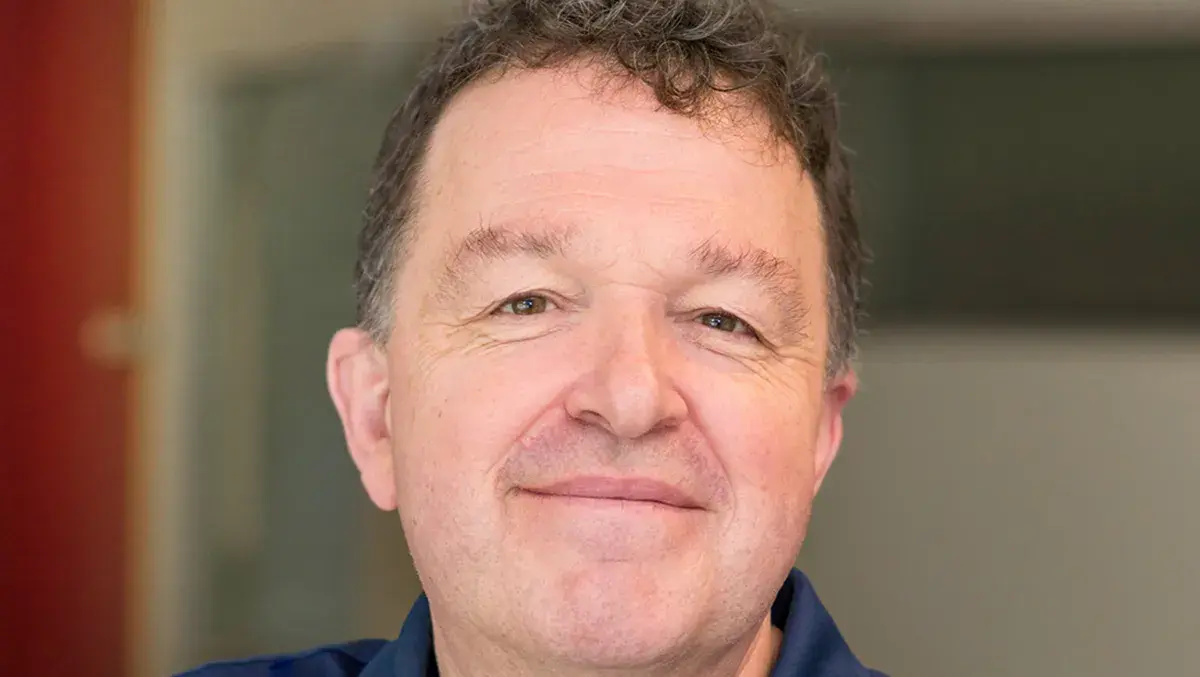
Sir Demis Hassabis is the British computer scientist, neuroscientist, and entrepreneur whose career has spanned competitive chess, video-game design, cognitive-neuroscience research, and the leadership of one of the most influential artificial-intelligence laboratories in the world. As co-founder and chief executive of DeepMind — acquired by Google in 2014 — Hassabis has overseen a sequence of research milestones that includes AlphaGo‘s 2016 victory over the world’s leading Go player and AlphaFold‘s solution to the long-standing protein-folding problem. In 2024 he was awarded the Nobel Prize in Chemistry jointly with John Jumper for the AlphaFold work, and was knighted in the same year.
| Demis Hassabis – Quick Facts | |
|---|---|
| Full Name | Sir Demis Hassabis CBE |
| Born | 27 July 1976 – North London, United Kingdom |
| Nationality | British (Greek Cypriot & Singaporean Chinese heritage) |
| Known For | Co-founder and CEO of Google DeepMind; AlphaGo, AlphaFold; 2024 Nobel Prize in Chemistry |
| Education | BA Computer Science, Queens’ College, Cambridge (1997); PhD Cognitive Neuroscience, University College London (2009) |
| Companies / Roles | Elixir Studios (founder, 1998); DeepMind (co-founder, 2010 – present); Google DeepMind (CEO, 2023 – present); Isomorphic Labs (founder, 2021) |
| Notable Honours | Nobel Prize in Chemistry (2024, jointly with John Jumper and David Baker); Knight Bachelor (2024); CBE (2018); Royal Society Fellow |
Early Life and Chess
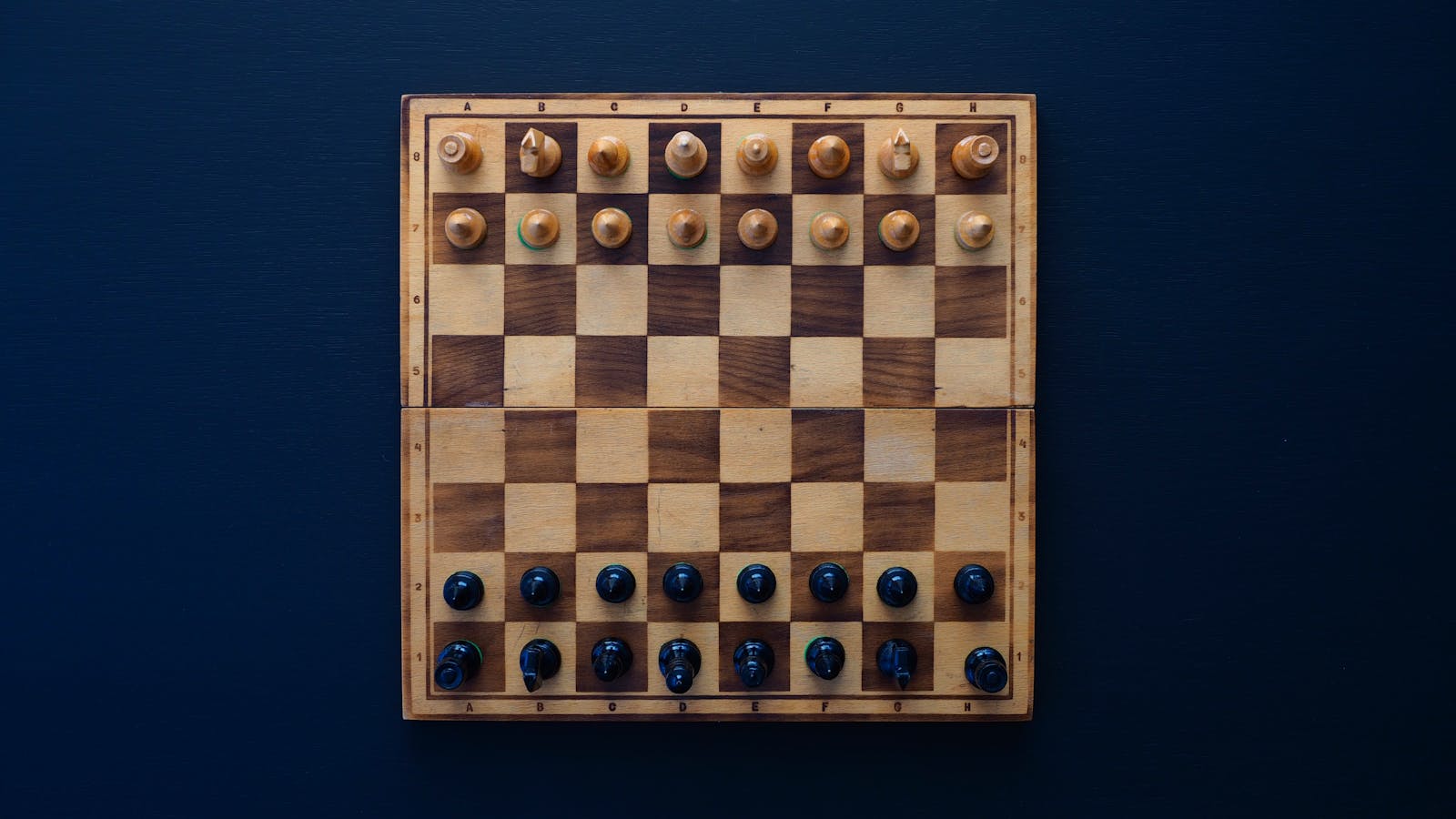
Demis Hassabis was born in north London in July 1976 to a Greek Cypriot father and a Singaporean Chinese mother. He has spoken in published interviews about a household that emphasised intellectual curiosity from an early age. By the age of four he had taught himself to play chess; by the age of thirteen he had reached the rank of master and was at one point the second-best player in the world for his age group.
Chess remained a defining part of his early development. He competed at international junior tournaments throughout his early teens, an experience he has cited in subsequent interviews as foundational to his lifelong interest in pattern recognition, planning, and problem-solving under structured rules – all themes that would later inform the kinds of computational problems he and his collaborators chose to study.
Cambridge and Early Game Design
At sixteen, Hassabis joined the British video-game studio Bullfrog Productions, where he co-designed and led the AI work for the simulation game Theme Park, released by Bullfrog in 1994. The game became a commercial success and is considered one of the milestones of early management-simulation design. He has spoken about the experience as his first encounter with practical applied AI: building intelligent agents that could respond plausibly to player behaviour in real time.
He subsequently studied Computer Science at Queens’ College, Cambridge, graduating in 1997 with a double first. After Cambridge he worked at Lionhead Studios with the legendary game designer Peter Molyneux on the title Black & White, before founding his own studio.
Elixir Studios and a Return to Research
In 1998 Hassabis founded Elixir Studios in London, focusing on AI-rich strategy games. The studio released Republic: The Revolution (2003) and Evil Genius (2004) before closing in 2005. According to Hassabis’s published statements, the period was formative in identifying both the technical and commercial limitations of game-industry AI as a framework for the broader scientific questions he wanted to investigate.
From 2005, he turned full-time to academic research, completing a PhD in cognitive neuroscience at University College London in 2009. His doctoral work focused on the role of memory and imagination in human decision-making, and produced widely cited papers on the neural substrates of episodic memory. Science magazine named one of his papers among the top ten scientific breakthroughs of 2007.
Founding DeepMind
In 2010, Hassabis co-founded DeepMind Technologies in London with neuroscientist Shane Legg and entrepreneur Mustafa Suleyman. The founding mission, as articulated in the company’s early public materials, was to “solve intelligence, and then use that to solve everything else” – a deliberately ambitious framing aimed at attracting the calibre of researchers required for foundational AI work.
DeepMind’s early research focused on combining deep learning with reinforcement learning, an approach the company demonstrated publicly in 2013 with a paper showing a single neural network learning to play a range of Atari 2600 games at human-competitive levels directly from raw pixel input.
Acquisition by Google and AlphaGo
In January 2014, Google acquired DeepMind in a deal widely reported in the technology press as valued at approximately $500 million. The acquisition kept the lab in London and preserved its independent research culture; Hassabis remained CEO. According to subsequent interviews, the decision was driven in part by the need for the computational scale that a parent company of Google’s size could provide.
The lab’s most globally visible early result came in March 2016, when AlphaGo defeated Lee Sedol, one of the strongest human Go players in history, in a five-game match in Seoul. Coverage in The New York Times, Nature, and other outlets identified the result as a landmark moment for AI research, two decades after IBM’s Deep Blue defeated Garry Kasparov at chess.
AlphaFold and the Protein-Folding Problem
From the late 2010s, DeepMind turned increasingly toward applying deep-learning approaches to fundamental scientific problems. The most significant outcome was AlphaFold, a system designed to predict the three-dimensional structure of proteins from their amino-acid sequences – a problem that had stood for roughly fifty years as one of the great open challenges in molecular biology.
AlphaFold 2 was disclosed in 2020 and described in detail in a 2021 Nature paper authored by John Jumper, Hassabis, and many DeepMind colleagues. The system achieved accuracy on the CASP14 benchmark that experts described as comparable to experimental methods. DeepMind subsequently released the predicted structures of more than 200 million proteins in an open database, in partnership with the European Bioinformatics Institute.
The scientific community’s response was substantial: a 2024 review in Nature noted that AlphaFold-derived structures have been used in tens of thousands of subsequent research papers across biology and medicine.
The 2024 Nobel Prize and Knighthood
On 9 October 2024, the Royal Swedish Academy of Sciences announced that the Nobel Prize in Chemistry had been awarded “for protein structure prediction” jointly to Hassabis and Jumper, and “for computational protein design” to David Baker of the University of Washington. The announcement was widely covered in international press as the first Nobel Prize associated with a deep-learning system.
Later in the same year, Hassabis was appointed a Knight Bachelor in the King’s Birthday Honours for services to artificial intelligence, becoming Sir Demis Hassabis. He had previously been appointed Commander of the Order of the British Empire (CBE) in 2018 for services to science and technology.
Google DeepMind and Isomorphic Labs Today
In April 2023, Google merged its long-standing Brain research team with DeepMind to form Google DeepMind, with Hassabis appointed chief executive of the combined organisation. Under the new structure, DeepMind has continued to publish foundational research while shipping products integrated into Google’s consumer and developer offerings, including the Gemini family of large language models.
Hassabis has also founded Isomorphic Labs, a separate Alphabet company launched in 2021 to apply DeepMind-style approaches to drug discovery and pharmaceutical research. According to public statements from Isomorphic, the company has signed research collaborations with major pharmaceutical partners. Hassabis chairs the company alongside his Google DeepMind role.
Public Statements and Research Direction
Hassabis has been an unusually visible CEO of an AI research organisation, regularly giving long-form interviews on the BBC, in The Financial Times, and at academic and industry conferences. His public commentary has frequently emphasised the dual potential of advanced AI – its capacity to accelerate scientific discovery (particularly in biology and materials science) alongside the responsibility he has argued accompanies such systems.
He has co-signed letters and statements on AI safety, including the 2023 Statement on AI Risk, and has spoken regularly about the importance of governance frameworks for frontier AI systems. He continues to publish actively in peer-reviewed journals.
Career Timeline
- 1976 – Born in north London
- 1989 – Reaches chess master rank at age 13
- 1994 – Co-designs Theme Park at Bullfrog Productions
- 1997 – Graduates from Queens’ College, Cambridge with a double first in Computer Science
- 1998 – Founds Elixir Studios in London
- 2009 – Completes PhD in cognitive neuroscience at UCL
- 2010 – Co-founds DeepMind with Shane Legg and Mustafa Suleyman
- January 2014 – DeepMind acquired by Google
- March 2016 – AlphaGo defeats Lee Sedol
- 2018 – Appointed CBE
- 2020 – AlphaFold 2 disclosed; CASP14 results announced
- 2021 – Founds Isomorphic Labs (Alphabet)
- April 2023 – Becomes CEO of merged Google DeepMind
- October 2024 – Awarded Nobel Prize in Chemistry (jointly with John Jumper)
- 2024 – Knighted in King’s Birthday Honours
Sources & References
- Demis Hassabis – Wikipedia
- Nobel Prize in Chemistry 2024 – Demis Hassabis
- Google DeepMind – Official Site
- Highly accurate protein structure prediction with AlphaFold (Nature, 2021)
- AlphaFold Protein Structure Database
- Isomorphic Labs – Official Site
This article is an editorial profile of a public figure based on publicly available information at the time of publication. Specific dates, papers, and honours reflect public records and reporting at the time. Nothing in this article constitutes financial, investment, or legal advice. Corrections and updates are made as new information becomes available.