Editorial notice. CONUI is an independent editorial publication. This article is editorial coverage based on publicly available information; CONUI is not affiliated with, endorsed by, or representing any individuals, companies, or projects mentioned. Nothing in this article constitutes financial, investment, or legal advice. See our editorial standards.
Tadao Ando is the Japanese architect whose work — typically realised in raw concrete, framed by openings calibrated to admit shifting natural light, and almost always organised around a strong relationship to landscape — has become one of the most influential contemporary architectural languages of the late twentieth and early twenty-first centuries. Born in Osaka in 1941 and entirely self-taught, Ando received the Pritzker Architecture Prize in 1995 and has since produced an internationally distributed body of work that includes private houses, churches, museums, and public-art commissions on the Japanese island of Naoshima and beyond.
| Tadao Ando – Quick Facts | |
|---|---|
| Full Name | Tadao Ando |
| Born | 13 September 1941 – Osaka, Japan |
| Nationality | Japanese |
| Known For | Self-taught contemporary architect; signature use of cast-in-place concrete, light, and landscape |
| Education | Self-taught (no formal architectural education); travelled extensively to study buildings in Europe, the United States, and Africa in the 1960s |
| Notable Honours | Pritzker Architecture Prize (1995); RIBA Royal Gold Medal (1997); AIA Gold Medal (2002); Praemium Imperiale (1996) |
| Studio | Tadao Ando Architect & Associates – Osaka, Japan |
Early Life and Self-Education
Tadao Ando was born in Osaka in September 1941. He has spoken in published interviews about a childhood marked by the difficult years of postwar Japan, raised in part by his maternal grandmother. As a young man, he briefly pursued a career as an amateur boxer before turning his attention to architecture.
Famously, Ando never attended architecture school. His self-education proceeded through three channels: the close study of architecture books and magazines purchased second-hand in Osaka; site visits to buildings across Japan; and, from the mid-1960s, extended travel to Europe, the United States, North Africa, and India to see, in person, the buildings he had previously known only from photographs. He has cited the work of Le Corbusier as a particular early influence – so much so that he travelled with a copy of Corbusier’s Oeuvre Complete as a young man.
The Founding of the Studio
In 1969, Ando founded Tadao Ando Architect & Associates in Osaka. The early years of the practice produced a sequence of small private houses in and around the city, each working through what would become signature concerns: poured-in-place concrete walls of unusually careful finish, windows positioned to admit specific qualities of light at specific times of day, and tightly controlled internal sequences that frame views as the visitor moves through the building.
The breakthrough project of the early period was the Row House in Sumiyoshi (1976), also known as the Azuma House – a small concrete dwelling on a tight urban plot that placed an internal courtyard at its centre, requiring inhabitants to cross open air to move between bedrooms and living spaces. The house received the Architectural Institute of Japan’s Annual Prize in 1979 and remains one of the most-discussed houses of late-twentieth-century residential architecture.
The Concrete Wall as Architectural Surface
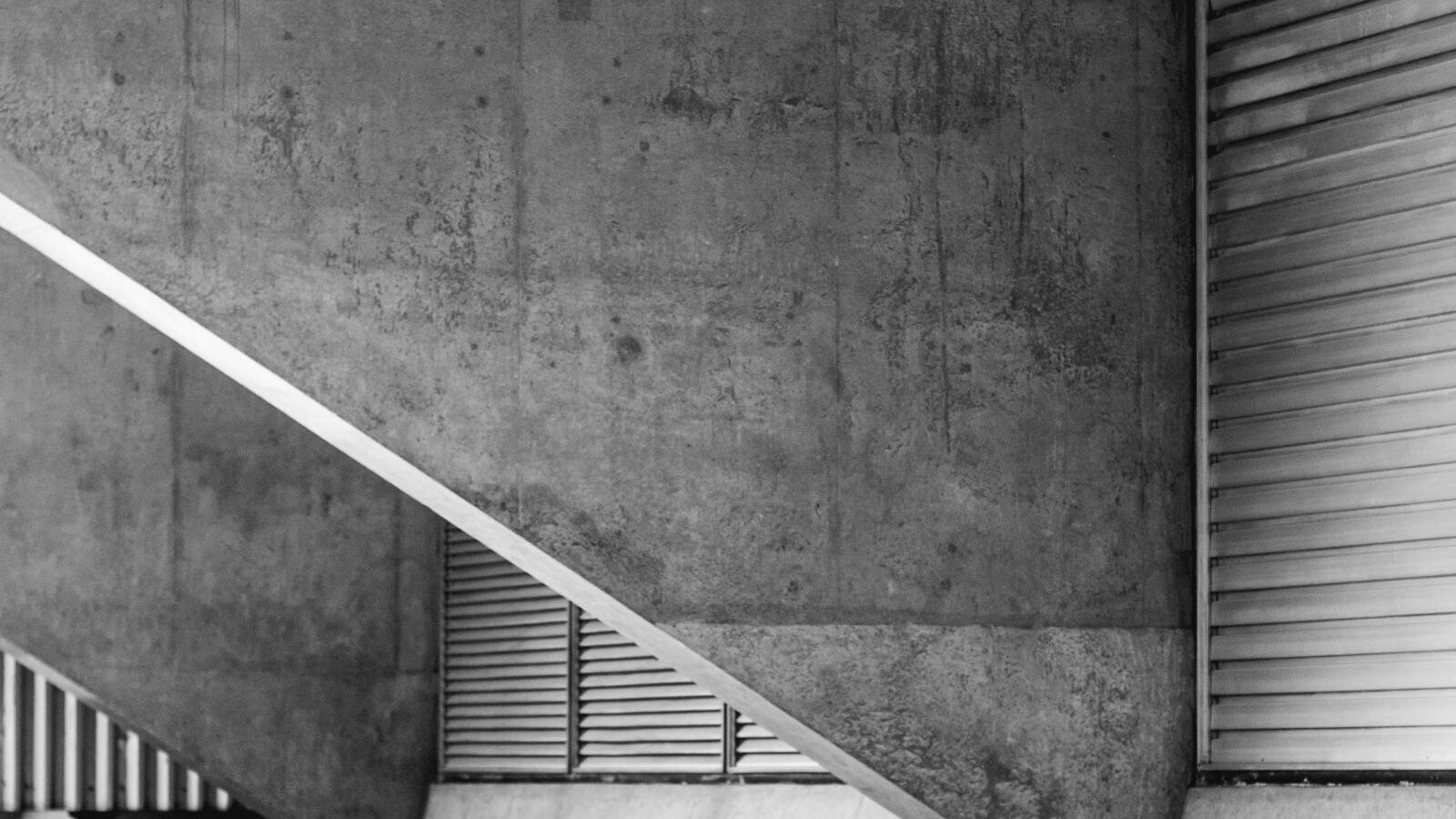
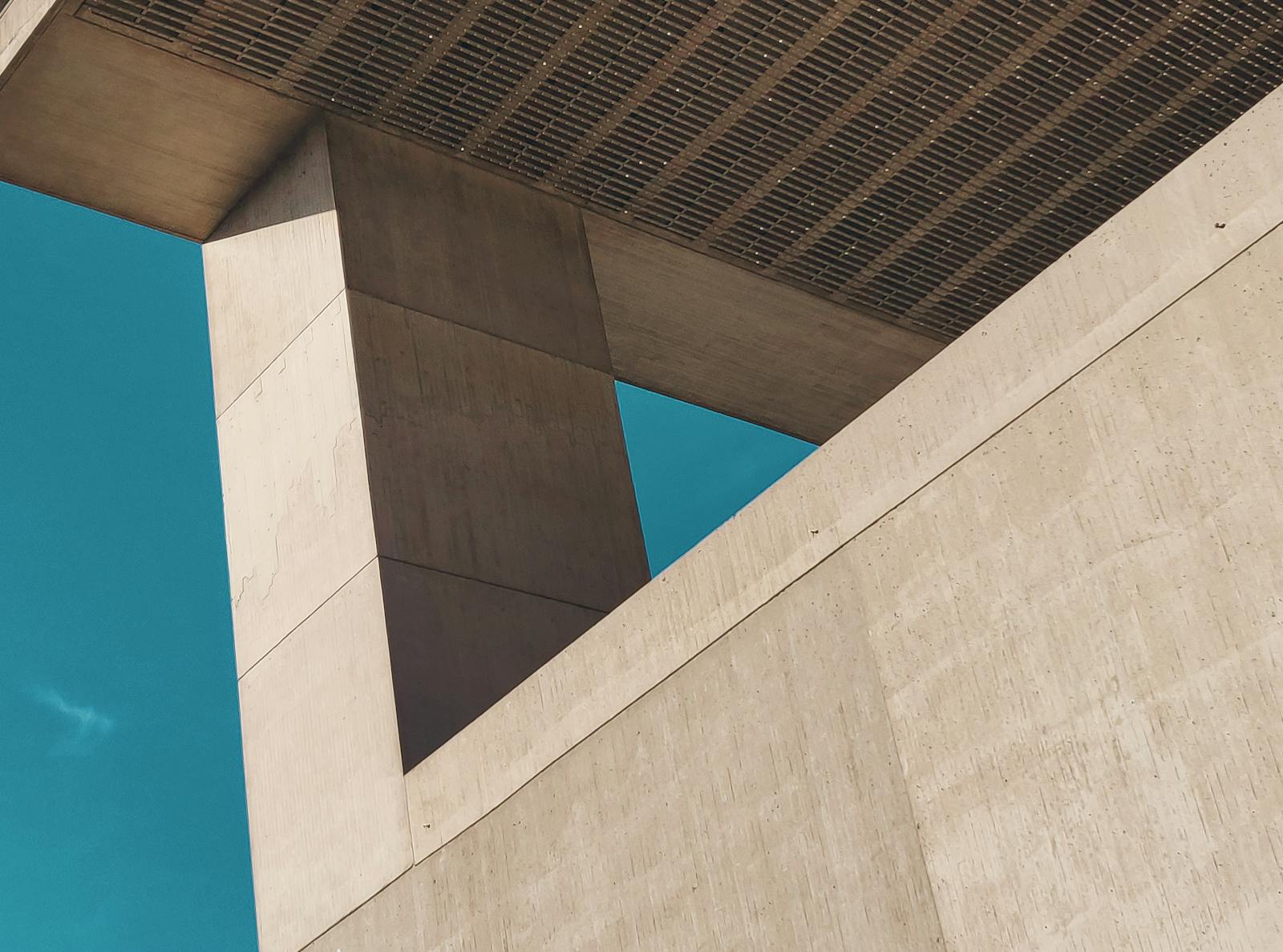
One of the defining technical aspects of Ando’s work is the quality of his concrete surfaces. The walls produced by his studio are cast in place using formwork dimensioned to a specific module – a 90 by 180 centimetre rectangle in many of the early houses, with precisely placed tie-rod holes that read as a pattern across the surface.
The concrete is mixed, poured, and cured with unusual care, and the resulting surfaces are typically left exposed without paint, plaster, or cladding. The colour, texture, and acoustic quality of the wall are themselves the architectural finish. This approach – extending Le Corbusier’s beton brut tradition but with a markedly different surface refinement – has become one of the most recognisable visual signatures in contemporary architecture and has been influential well beyond Ando’s own buildings.
Religious and Memorial Architecture
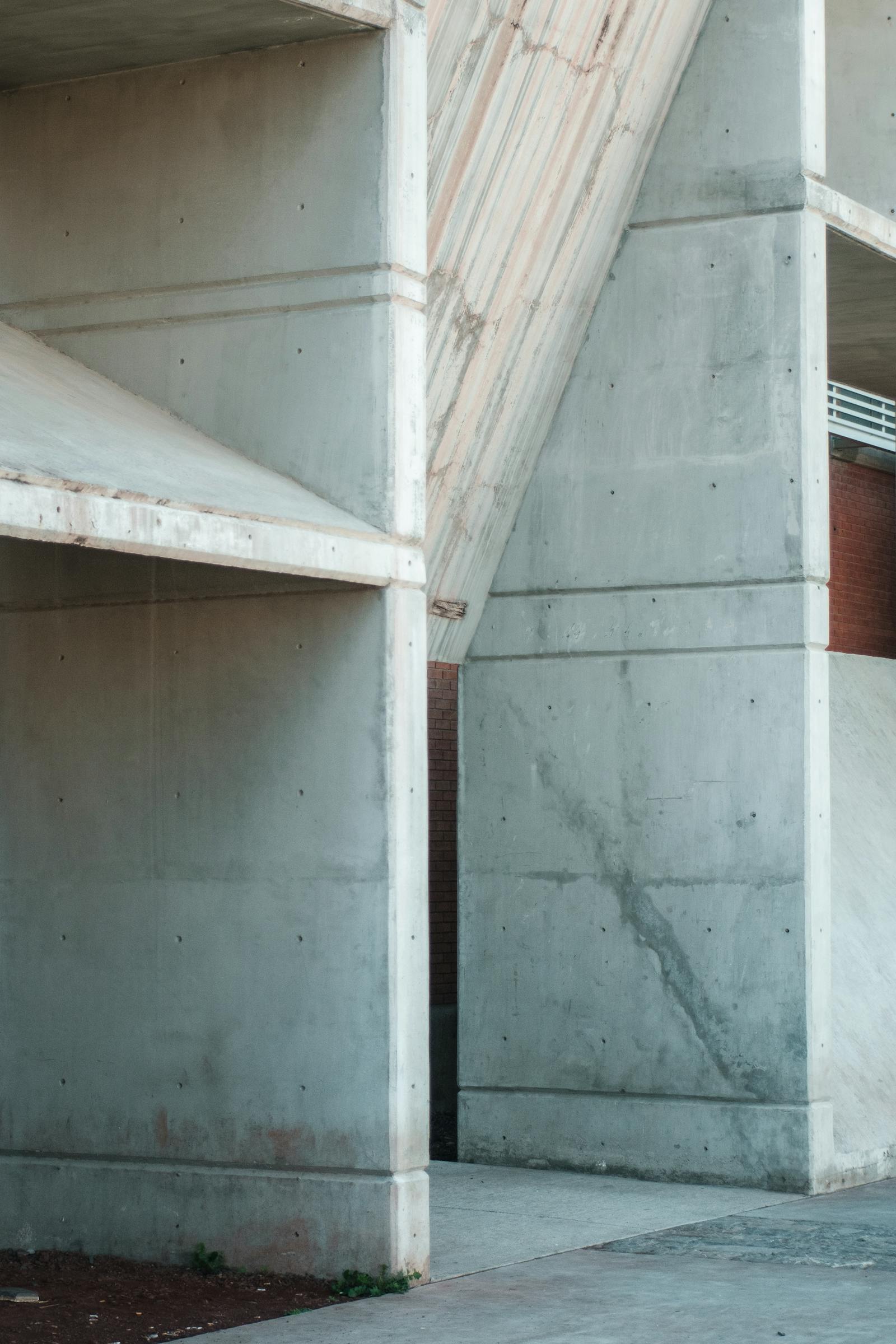
Ando has produced a particularly rich sequence of religious and contemplative buildings. The Church of the Light (Ibaraki, Osaka, 1989) is perhaps the most-photographed: a simple rectangular concrete volume punctuated at one end by a cruciform aperture cut directly through the wall, behind which the congregation faces a luminous cross of daylight. The Church on the Water (Hokkaido, 1988) extends the same logic outward, opening the chapel directly onto a constructed pond reflecting forest beyond.
These projects are widely regarded as among the most accomplished religious architecture of their period. Coverage in Architectural Digest, Architectural Record, and academic monographs has emphasised the way Ando’s restrained material vocabulary creates conditions for what visitors typically describe as a contemplative response.
Naoshima and the Benesse Art Site
From the late 1980s onward, Ando became the principal architect of the long-running art-island project on Naoshima, in the Seto Inland Sea, in collaboration with Soichiro Fukutake of the Benesse Art Site. The sequence of buildings – Benesse House Museum (1992), Chichu Art Museum (2004), Lee Ufan Museum (2010), and Valley Gallery (2022), among others – has transformed the island into one of the most-visited destinations in contemporary architectural tourism.
The Naoshima projects are characteristic in their relationship to landscape. Several of the museums are partially or wholly subterranean, with the architecture inscribed into the slopes of the island so as to leave its surface largely intact. Daylight is conducted into the buried galleries through skylights and open courtyards, producing a sequence of viewing conditions that varies through the day and across the seasons.
International Commissions
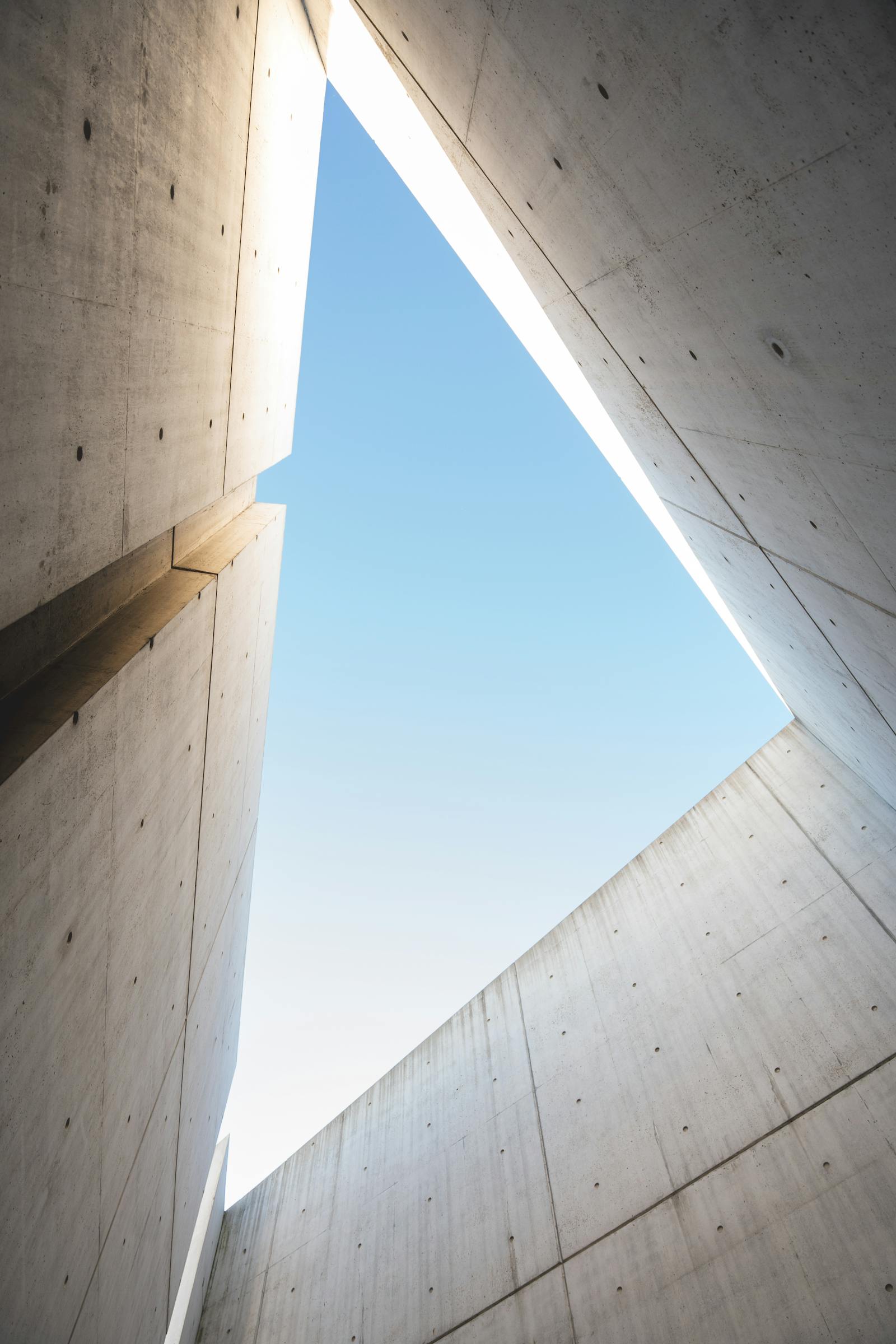
From the 1990s onward, Ando’s practice has executed an increasingly international portfolio. Major projects outside Japan include the Modern Art Museum of Fort Worth (Texas, 2002), the Pulitzer Arts Foundation (St. Louis, 2001), the Punta della Dogana conversion in Venice (2009) and the Palazzo Grassi renovation (2006) for the Pinault Collection, the Stone Hill Center at the Clark Art Institute (Williamstown, Massachusetts, 2008), and the He Art Museum (Foshan, China, 2020).
The Venetian work is widely cited as a notable exercise in contemporary intervention within historic fabric. Ando’s contributions at Punta della Dogana – where he inserted contemporary concrete elements within the seventeenth-century customs house – have been examined in detail by architectural press as an example of a restrained, legible contemporary insertion.
Pritzker Prize and Recognition
In 1995, Ando received the Pritzker Architecture Prize, then widely regarded as the highest honour in international architecture. He donated the prize money to support orphans of the 1995 Kobe earthquake.
Subsequent honours include the RIBA Royal Gold Medal (1997), the AIA Gold Medal (2002), the Praemium Imperiale (1996), the Order of Culture from the Government of Japan, the Order of the Rising Sun, and honorary doctorates and academic appointments from institutions across the world. He has held visiting professorships at Columbia, Harvard, and Yale, and has been a professor at Tokyo University.
Recent Work and Public Profile
Ando has remained substantively active into his eighties. Recent and ongoing work includes the Bourse de Commerce renovation in Paris (2021) for the Pinault Collection – inserting a contemporary concrete cylinder within the historic grain-exchange building – and the He Art Museum in Foshan, China. Coverage in Dezeen, Architectural Review, and ArchDaily has continued to track new projects in active design or construction.
He has spoken openly in published interviews about his ongoing work despite serious health challenges in recent years, and he remains based at his Osaka studio.
Career Timeline
- 1941 – Born in Osaka, Japan
- 1960s – Self-educates in architecture; travels to Europe, North Africa, India
- 1969 – Founds Tadao Ando Architect & Associates in Osaka
- 1976 – Row House in Sumiyoshi (Azuma House) completed
- 1988 – Church on the Water completed (Hokkaido)
- 1989 – Church of the Light completed (Ibaraki, Osaka)
- 1992 – Benesse House Museum opens on Naoshima
- 1995 – Awarded the Pritzker Architecture Prize
- 2002 – Modern Art Museum of Fort Worth opens (Texas)
- 2004 – Chichu Art Museum opens on Naoshima
- 2009 – Punta della Dogana renovation completed (Venice)
- 2020 – He Art Museum opens (Foshan, China)
- 2021 – Bourse de Commerce renovation completed (Paris)
- 2022 – Valley Gallery opens on Naoshima
Sources & References
- Tadao Ando – Wikipedia
- Pritzker Architecture Prize 1995 – Tadao Ando
- Tadao Ando Architect & Associates – Studio Site
- Benesse Art Site Naoshima – Official Site
- Architectural Review – Ando coverage
- Dezeen – Tadao Ando project coverage
This article is an editorial profile of a public figure based on publicly available information at the time of publication. Specific dates, projects, and honours reflect public records and reporting at the time. Nothing in this article constitutes financial, investment, or legal advice. Corrections and updates are made as new information becomes available.