

Editorial notice. CONUI is an independent editorial publication. This article is editorial coverage based on publicly available information; CONUI is not affiliated with, endorsed by, or representing any individuals, companies, or projects mentioned. Nothing in this article constitutes financial, investment, or legal advice. See our editorial standards.
Modern yacht interior design is shaped, more than most other design disciplines, by where its work will be lived in. Two cruising regions — the Mediterranean and the Caribbean — have produced two distinct interior-design schools, each with its own materials, palette, and underlying mood. Understanding the difference is more than a style question: it changes how a yacht feels at anchor, how it ages under sun and salt, and how an owner briefs the studio that will draw it.
| Mediterranean vs Caribbean — Style at a Glance | |
|---|---|
| Mediterranean climate | Hot, dry summers; cool, breezy evenings; strong sun |
| Caribbean climate | Warm year-round; high humidity; salt-laden trade winds |
| Mediterranean palette | Warm neutrals; travertine; walnut and oak; muted bronze accents |
| Caribbean palette | Cool whites; bleached teak; linen; coral and sea-blue accents |
| Mediterranean mood | Architectural; collected; formal-relaxed |
| Caribbean mood | Resort-residential; barefoot-luxury; indoor-outdoor |
| Notable Mediterranean designers | Achille Salvagni; Studio Indigo; Lazzarini & Pickering |
| Notable Caribbean designers | Terence Disdale; Bannenberg & Rowell; Kelly Hoppen |
Two Seas, Two Languages of Design
Yacht interior design is rarely a question of pure aesthetic preference. Materials, finishes, and even ceiling heights are negotiated against the climate the yacht will sit in for most of the year — and against the social rituals that the region invites. A yacht that spends its summers in Porto Cervo and its evenings in Cap-Ferrat is briefed differently from one that spends its season anchored off St Barths and Antigua.
Two related but distinct interior-design schools have grown out of these two cruising regions. The Mediterranean school tends toward an architectural, collected, almost gallery-like sensibility, drawing on the design traditions of Milan, Rome, and the French Riviera. The Caribbean school tends toward a lighter, more residential-resort sensibility, drawing on island architecture, colonial-revival styles, and a barefoot-luxury vocabulary that has its own well-known practitioners.
The Mediterranean Tradition
The Mediterranean school of yacht interior design is the older of the two. Its lineage runs through Italian and French shipyards — Sanlorenzo, Benetti, Codecasa, Riva — and through the architectural design culture of Milan and Rome. It is, broadly, a style that treats a yacht’s interior as a piece of architecture first and a piece of yacht-furniture second.
Public projects in this tradition have been documented in Boat International, Architectural Digest, and Elle Decor over the past two decades. They tend to share a common vocabulary: travertine and Roman stone surfaces; walnut, oak, or olive joinery; bronzed metal accents rather than chrome; and curated art collections — often original works rather than decorator-grade prints.
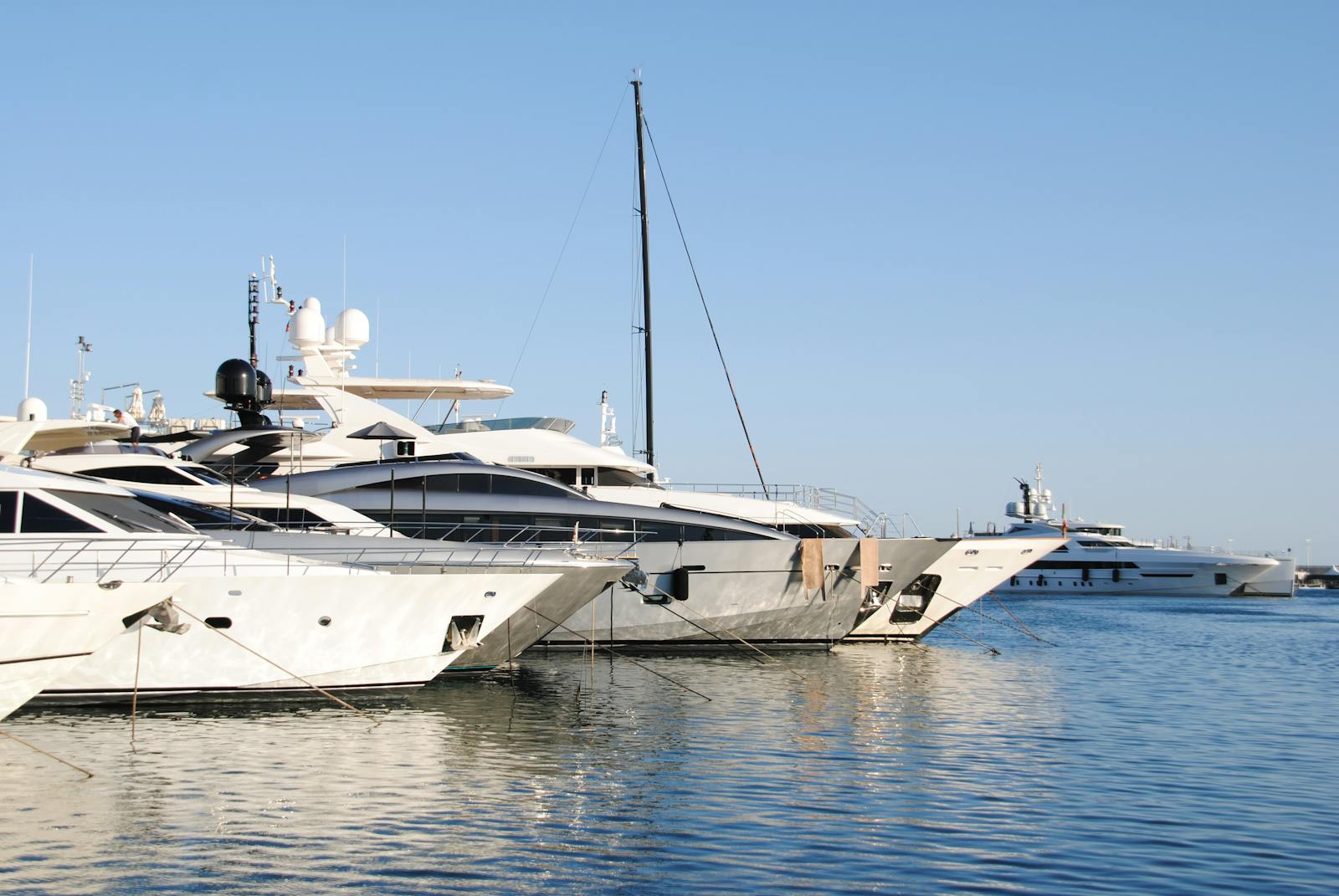
Materials and Palette of the Mediterranean Interior
The materials of the Mediterranean school are unmistakable on board. Travertine — the warm, porous limestone of central Italy — appears in floors, vanities, and bathing suites. Walnut and Italian oak are used in joinery, often with oiled or smoked finishes that develop a patina under sunlight. Wall surfaces lean toward textured plasters, fabric panels in linen or fine wool, and occasional fresco-style hand-painted detail.
The palette is almost always built around warm neutrals — sand, biscuit, pale ochre, soft white — with accents in muted bronze rather than yellow gold or chrome. Where colour appears, it tends to be tonal: terracotta, sienna, rust, deep olive. Furniture is often a combination of Italian mid-twentieth-century pieces — Gio Ponti, Carlo Mollino, Ico Parisi — and contemporary commissions from studios such as Achille Salvagni Atelier.
Notable Mediterranean Designers and Studios
Among the studios most closely associated with the Mediterranean school is Achille Salvagni Atelier, whose work has been profiled in Architectural Digest and Boat International for its blend of Roman classicism with mid-century Italian design. Salvagni’s yacht commissions have repeatedly been cited in industry coverage as exemplars of the contemporary Italian school.
Studio Indigo — the London-based practice led by Mike Fisher — has also delivered a sequence of widely published Mediterranean-flavoured yacht interiors, often combining English country-house references with Italian craft. Lazzarini & Pickering, based in Rome, has been a long-time collaborator with Wally and other Italian yards on yachts where the architectural-minimalist Mediterranean idiom is taken to its most stripped-down expression.
Italian shipyards in particular have embraced the school as a kind of national export. Sanlorenzo’s collaborations with Piero Lissoni on the SX and SP series have been extensively covered in design press as a contemporary continuation of the Mediterranean tradition.
The Caribbean Tradition
The Caribbean school of yacht interior design developed later — and from a different cultural base. Its references are island architecture (the colonial-revival “great house” of Mustique or the Bahamas), the resort vernacular of properties such as the Cotton House and Cap Juluca, and the broader idiom that emerged in the 1980s and 1990s of indoor-outdoor living adapted to a tropical climate.
Where the Mediterranean school treats the interior as architecture, the Caribbean school often treats it as a continuation of the deck — open to the air, light in materials, and willing to blur the boundary between saloon and aft cockpit. The result is a sensibility that has become known, both in design press and in industry shorthand, as “barefoot luxury”.
Materials and Palette of the Caribbean Interior
The materials of the Caribbean school are pitched toward humidity, salt air, and sustained ultraviolet exposure. Bleached teak — paler than the deep honey-coloured teak of traditional yachts — is a hallmark, often paired with limed oak for joinery. Woven materials appear throughout: rattan, cane, sea-grass matting, and woven leather. Rope detailing — manila, hemp, or marine-grade synthetic — appears in handrails, lighting, and feature walls.
The palette is almost the inverse of the Mediterranean school. Whites are cool rather than warm, often with a hint of grey or pale blue. Accents come in coastal colours — coral, sea-glass green, washed indigo, sand. Soft furnishings lean toward linen and washed cottons rather than heavier woollens. Outdoor and indoor furniture often share the same textiles, allowing the saloon to read as an extension of the cockpit.
Notable Caribbean Designers and Studios
The most-cited single figure in the Caribbean school is Terence Disdale, the British designer whose decades of yacht commissions — including some of the most photographed superyachts of the past thirty years — have been credited in industry coverage with originating the contemporary “barefoot luxury” vocabulary. Disdale’s work has been documented in Boat International and in various retrospectives of his commissioned interiors.
Bannenberg & Rowell, the London-based studio with roots reaching back to the pioneering yacht designer Jon Bannenberg, has delivered multiple yacht interiors that are now closely identified with the Caribbean school. Kelly Hoppen, also London-based, has applied her widely published “earthy neutrals” residential vocabulary to a number of yacht interiors that fit the Caribbean idiom comfortably.
Among shipyards, Feadship in the Netherlands and US-based yards including Westport have delivered some of the most influential Caribbean-school yachts, often working with British or American interior studios on the styling.
Where the Two Schools Meet
In practice, the boundary between the two schools is permeable. Many large modern yachts circumnavigate annually — Mediterranean summer, Caribbean winter — and their interiors are designed to perform in both. Studios such as Winch Design, Reymond Langton, and Bannenberg & Rowell are widely cited for delivering interiors that are deliberately neither fully Mediterranean nor fully Caribbean — using materials and palettes that read elegantly under either climate.
One observation that designers have repeated in published interviews is that owner taste, more than yacht itinerary, increasingly drives the choice of school. A European owner who never cruises south of Sardinia may still brief a Caribbean-school interior because that is the mood they want to live in; an American owner whose yacht spends the season in the Mediterranean may still choose the architectural Roman idiom.
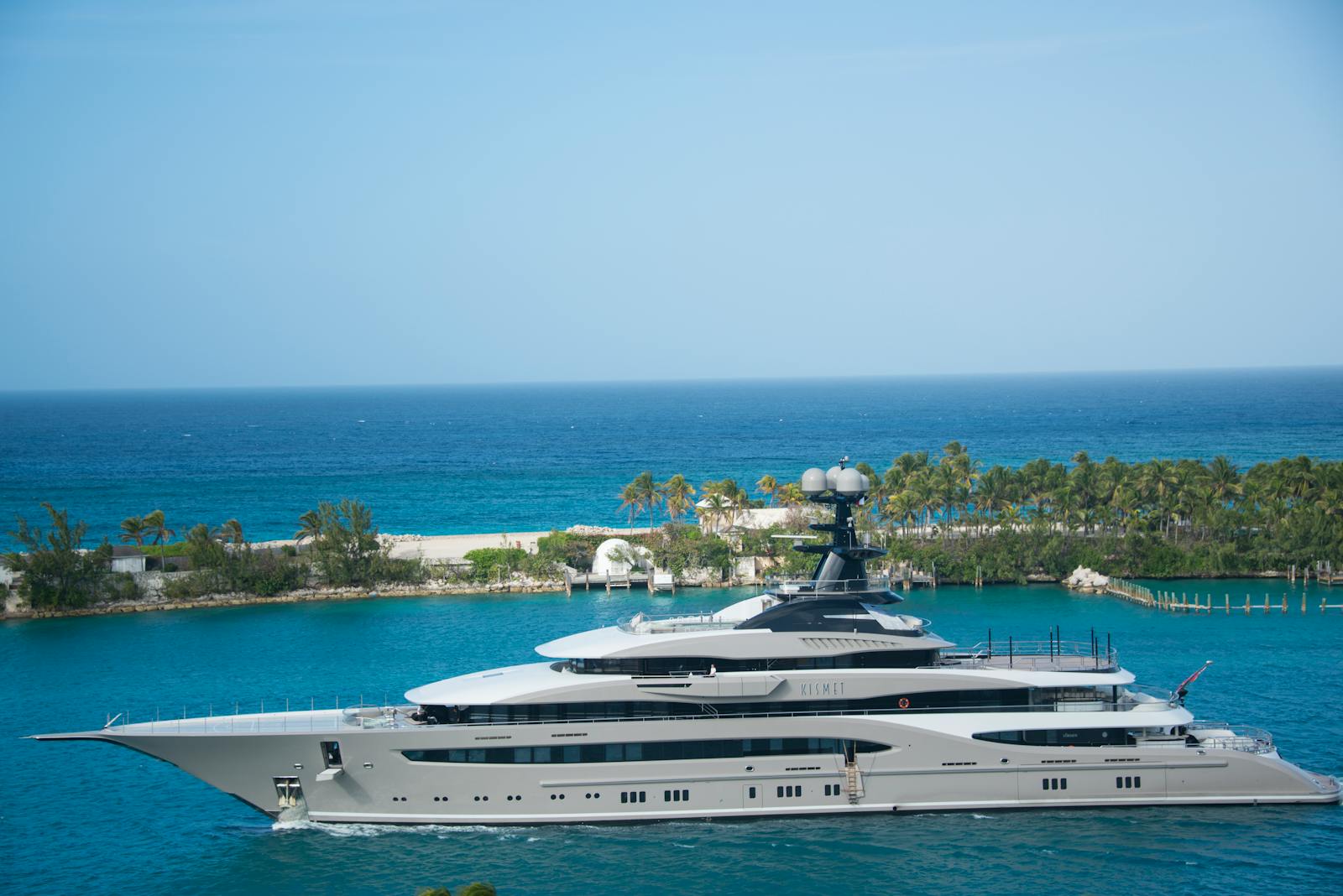
Choosing a Style — Practical Considerations
For owners and design teams approaching a new build or refit, a few considerations are typically discussed at briefing stage. Designers consulted in published interviews tend to mention the same set of factors:
- Climate exposure. Mediterranean materials such as travertine and warm woollens perform better in dry-summer climates; Caribbean materials such as bleached teak, linen, and rattan are designed for sustained humidity.
- Owner ritual. Yachts that host frequent formal entertaining tend toward the Mediterranean idiom; yachts that prioritise barefoot family cruising lean Caribbean.
- Art programme. Mediterranean interiors often centre on a curated art collection; Caribbean interiors more often use commissioned craft pieces and natural materials.
- Maintenance. Both schools require expert maintenance, but the failure modes differ — UV-degradation and salt staining for natural materials in the Caribbean; pressed-stone wear and fabric soiling in heavily entertained Mediterranean interiors.
The Two Schools in 2025
As of 2025, both schools are healthy and well-represented in the order books of major European and US shipyards. Industry coverage in Boat International and Superyacht Times over the past two years suggests a small but sustained shift toward what some commentators call “hybrid” interiors — projects that draw on both schools and pull in influences from Asian and Middle Eastern design traditions as well.
What has not changed is the underlying logic: that a yacht’s interior is, more than almost any other architectural commission, a piece of design read against a specific climate, a specific itinerary, and a specific way of living on the water. Whichever school an owner ultimately chooses, the most successful yacht interiors are the ones that take that context seriously.
Sources & References
- Boat International — Yacht Design coverage
- Architectural Digest — Yacht and Interior Design archive
- Superyacht Times — Industry coverage
- Achille Salvagni Atelier — Official Site
- Studio Indigo — Official Site
- Winch Design — Official Site
This article is an editorial overview of two well-documented yacht-interior design traditions. Designers, studios, and projects mentioned are public figures and publicly documented works. Nothing in this article constitutes financial, investment, or purchasing advice. Corrections and updates are made as new information becomes available.